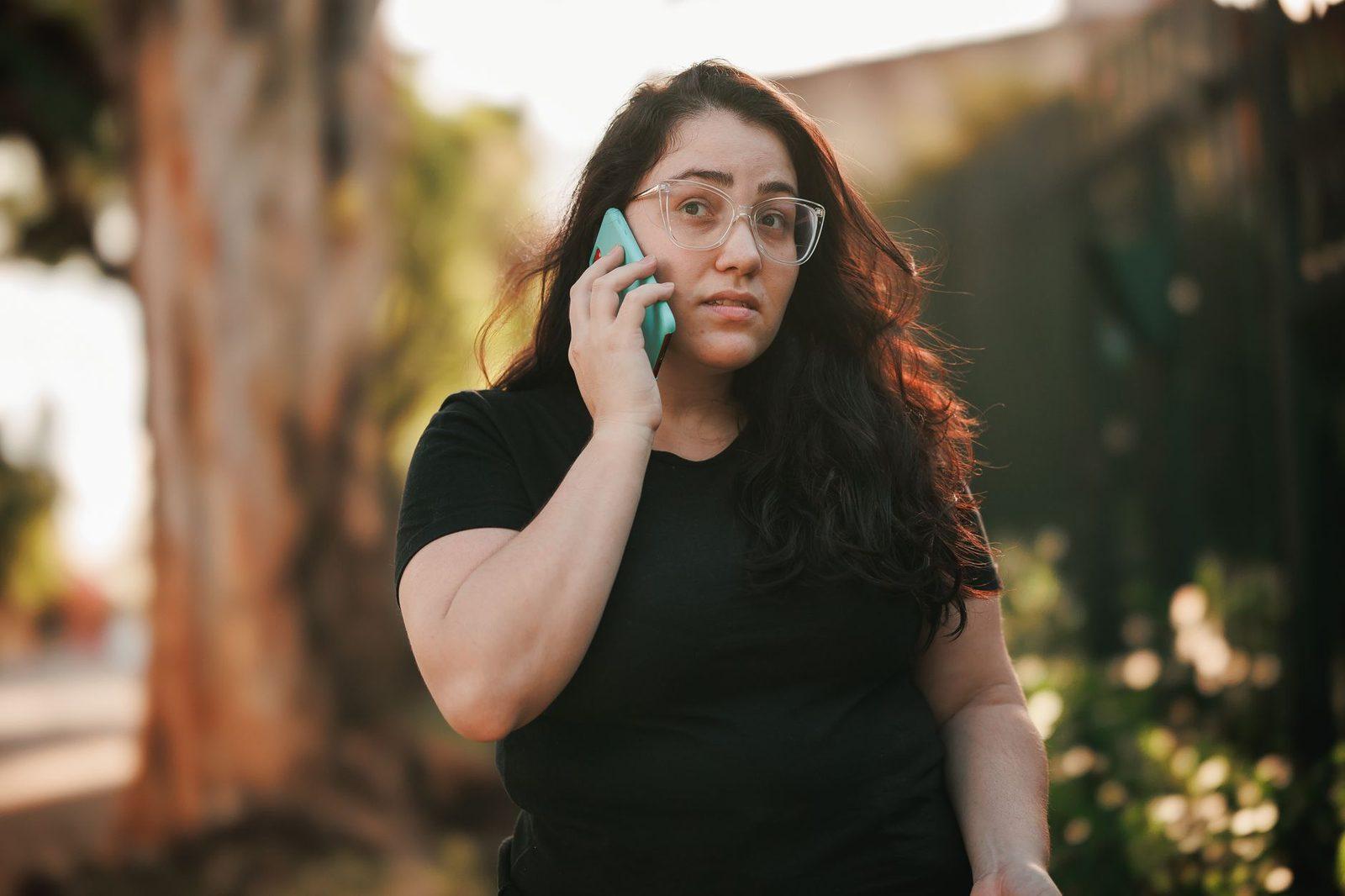
"ENEDIS: your meter has not transmitted its remote reading for the last 2 cycles. An adjustment of 48.70 EUR is due. Without action within 72h, a chargeable technician visit will be scheduled: https://enedis-releve-index.com/regul"
This one doesn't talk to you about a parcel you never ordered, or a fine you don't recognise. It talks about a very real box, sitting in your hallway or in a utility cupboard, whose workings you don't really understand. And that is exactly where the scam nests: in the gap between an everyday object and complete ignorance of its administrative circuit.
The fake Enedis text message is one of the most effective smishing campaigns of recent months, because it has almost nothing to invent. Smart meters exist, remote meter reading exists, annual adjustments exist, and chargeable technician visits exist too. Everything is true — except the sender, the amount and the link.
The blind spot the scam exploits: who does what in the electricity sector?
Ask the people around you: "Who reads your meter? Who bills you for electricity? Who comes out if the meter breaks down?" You'll get three hesitant and often contradictory answers. That's normal — the sector was split between several players when the market was opened up, and the division of roles has never been explained simply to the general public.
In practice, in mainland France:
- Enedis is the distribution network operator. It is the company that installs, maintains and reads meters, and that handles connections. It covers around 95% of the territory; elsewhere, local distribution companies take over.
- Your supplier (EDF, TotalEnergies, Engie, Octopus, Enercoop, Mint, etc.) is the company you hold a contract with, and it is the only one that sends you bills and collects your payments.
- The médiateur national de l'énergie is the public body that settles disputes between consumers and professionals in the sector.
Remember the practical consequence, because it is enough to defuse the entire campaign: Enedis never bills you and never asks you to pay online. The network operator has no commercial relationship with you. An "adjustment" always goes through your supplier, on your bill, and never through a link received by text message.
A text message signed Enedis asking you to settle an amount is, by definition, a fake. There is no exception to this rule.
The four scenarios in circulation
The campaign comes in several versions, and it's useful to recognise the variants rather than memorise a single wording.
1. The "untransmitted" remote reading
The flagship scenario. The text claims the meter hasn't sent its reading, that consumption has therefore been estimated at the maximum, and that an adjustment is due. It's credible because communication failures really do happen: a meter can genuinely stop transmitting, particularly in a basement or behind a thick concrete wall. In real life, this problem is never settled by a payment: it's settled by a technical visit, which is free of charge in such cases.
2. The chargeable visit "to be scheduled"
A more threatening variant: if you don't react, a technician will be dispatched and the visit will cost you €60 to €90. The amount is carefully chosen: high enough to worry you, low enough that you'd rather "settle it right away" than call and wait twenty minutes on the phone.
3. The fake refund of an overpayment
The exact opposite. The text announces that your actual consumption was lower than the estimate and that a credit of €134 is waiting for you. You're invited to enter your IBAN "to receive the transfer". Here you're not being asked to pay, but to hand over complete bank details — which will then be used to set up a direct debit operation or to feed a so-called "bank adviser" fraud.
4. The fake change of supplier
The most recent version, and the most devious: the text claims your contract has been transferred to a new supplier and asks you to "confirm or cancel" the change. The form then demands your delivery point reference (PDL/PRM), your customer account login details, and sometimes proof of identity. The goal: take control of your account to divert a refund or sign up for a contract in your name.
The signs that give the fake text away
Take the message at the top of this article and run it through the checklist. Six points are enough.
| Signal | What the fake text does | What the real player does |
|---|---|---|
| Request for money | Immediate payment link | Enedis never bills private customers |
| Deadline | 24, 48 or 72 hours | No urgency of this kind by text |
| Domain name | enedis-releve-index.com, enedis-regul.net | Official domains on enedis.fr |
| Amount | Precise to the cent, with no breakdown | Itemised bill from your supplier |
| Spelling | Missing accents, erratic capitals | Short message, error-free |
| Personalisation | "Dear customer" or nothing at all | Reference to your actual contract |
The domain name remains the ultimate arbiter. A fraudster can write "Enedis" in the text as often as they like; they cannot use the official domain. Read the address from right to left, starting at the last dot before the first forward slash: that's where the site's real owner sits. enedis.service-regularisation.com belongs to service-regularisation.com, not to Enedis.
On a 5-inch screen, that kind of reading is a chore, and that is precisely what the fraudsters are banking on. People checking their messages on the move, in bright sunlight or with tired eyesight are the most exposed. A simple anti-glare tempered glass screen protector or switching to a larger font size in the accessibility settings makes a concrete difference to your ability to read a full URL before clicking.
Why this scam works so well in autumn
The timing is no accident. Between September and December, several factors the fraudsters know inside out all come together:
- Meter readings and annual adjustments frequently fall during this period for many contracts. Receiving a message about your consumption is therefore nothing out of the ordinary.
- Bills go up as the heating comes on. Attention to energy spending is at its peak, and so is anxiety.
- Renovation and subsidy campaigns multiply, blurring the lines around "who has the right to contact me".
- Supplier switches are numerous at the end of the year, when offers are updated.
The result: a text message about electricity in October doesn't trigger the same alarm as a text about a parcel stuck in customs. It fits into a plausible context. Smishing, as Cybermalveillance.gouv.fr points out, relies not on technical sophistication but on the plausibility of the pretext.
The ten-second reflex: never start from the message
The general rule applies here as everywhere else: never verify a piece of information using the channel that delivered it. If the text is fake, its link is fake, its callback number is fake, its form is fake. Everything it contains belongs to the fraudster.
The healthy procedure comes down to three steps:
- Open your supplier's customer account using the app you've already installed, or by typing the address yourself. Any genuine adjustment will appear there.
- Look at your latest paper or PDF bill. It carries your supplier's name, your customer number and the official service phone number.
- If any doubt remains, call the number on the bill, never the one in the text.
For households where several people manage the contracts, a document folder for bills kept in the hallway is worth any antivirus: when the reference bill can be found in thirty seconds, nobody feels the need to click a link to "check".
How to report it, and to whom
Reporting is not a symbolic gesture: it's what gets the numbers and websites being used taken down.
- 33700 is the official platform for reporting unwanted and fraudulent text messages, set up with the mobile operators under the aegis of Arcep. Forward the text to 33700, then send the sender's number in a second message when prompted. It's free.
- Signal Spam lets you report fraudulent electronic messages.
- Phishing Initiative (run with cybersecurity teams) lets you report the address of the fake site so it can be blocked in browsers.
- Cybermalveillance.gouv.fr offers a free assistance pathway and quick-reference fact sheets.
- If you've suffered financial loss, file a complaint at a police station or gendarmerie, and report it on Perceval (the French government's online service) in the case of bank card fraud.
You clicked: the list of useful steps
Clicking isn't the same as losing. What matters is what you entered next.
You only opened the page, without filling anything in. The risk is low. Close the tab, clear your history, and don't go back to the page. Booby-trapped texts don't trigger an infection from a simple visit on an up-to-date phone — one more reason to accept system updates as soon as they appear.
You entered your customer account login details. Change the password immediately on the official site, and everywhere else you used the same one. This is the moment to switch to a password manager, or, for those who prefer paper, to a password notebook kept out of sight — the key point being never to reuse the same combination across several services.
You gave out your bank card number. Block the card without delay through your bank or the interbank hotline, then file a complaint and report it on Perceval. The European payment services directive sets out the conditions for refunding unauthorised transactions: don't hesitate to make your request in writing.
You passed on your IBAN. An IBAN alone can't empty an account, but it does allow someone to attempt direct debits. Monitor your statements for several months and ask your bank to set up a list of authorised payees or to block any unrecognised direct debit.
You sent a copy of your ID. Keep the evidence, file a complaint, and bear in mind the medium-term risk of identity theft: a copy of an identity card circulates for a long time.
Protecting those most at risk
This scam hits elderly people living alone particularly hard, for a simple reason: they often have an old electricity contract, a relationship of trust with "the EDF" as an institution, and little familiarity with online customer accounts. A fake text about the meter touches a sensitive nerve for them — the fear of being cut off.
A few concrete measures help far more than a lecture:
- Display the supplier's name and official phone number near the telephone, copied from the bill.
- Agree on a single rule: no online payment without talking to a family member or friend first. The rule must be absolute, otherwise it collapses under the pressure of the 72-hour deadline.
- For older people who don't use the internet, a big-button mobile phone with no browser mechanically removes any risk of clicking — the texts still arrive, but they lead nowhere.
- Where the operator offers it, enable anti-spam message filtering, and always report to 33700.
What the meter scam teaches us
There's a transferable lesson in this campaign, and it goes well beyond the energy sector. Fraudsters no longer try to impersonate prestigious institutions: they go looking for poorly understood administrative circuits. Remote meter reading, the transfer of a contract, the role of a network operator: all subjects whose precise rules nobody knows, and where it therefore becomes impossible to spot an inconsistency.
The defence isn't technical, it's documentary. Knowing who has the right to ask you for money, through which channel, and at which moment disarms almost every smishing campaign. A good practical cybersecurity guide aimed at the general public does more work on this front than any filtering app.
And for the rest, keep in mind the sentence that sums it all up: an institution that gives you a 72-hour deadline by text message with a payment link is not an institution. It's a fraudster who knows your calendar.