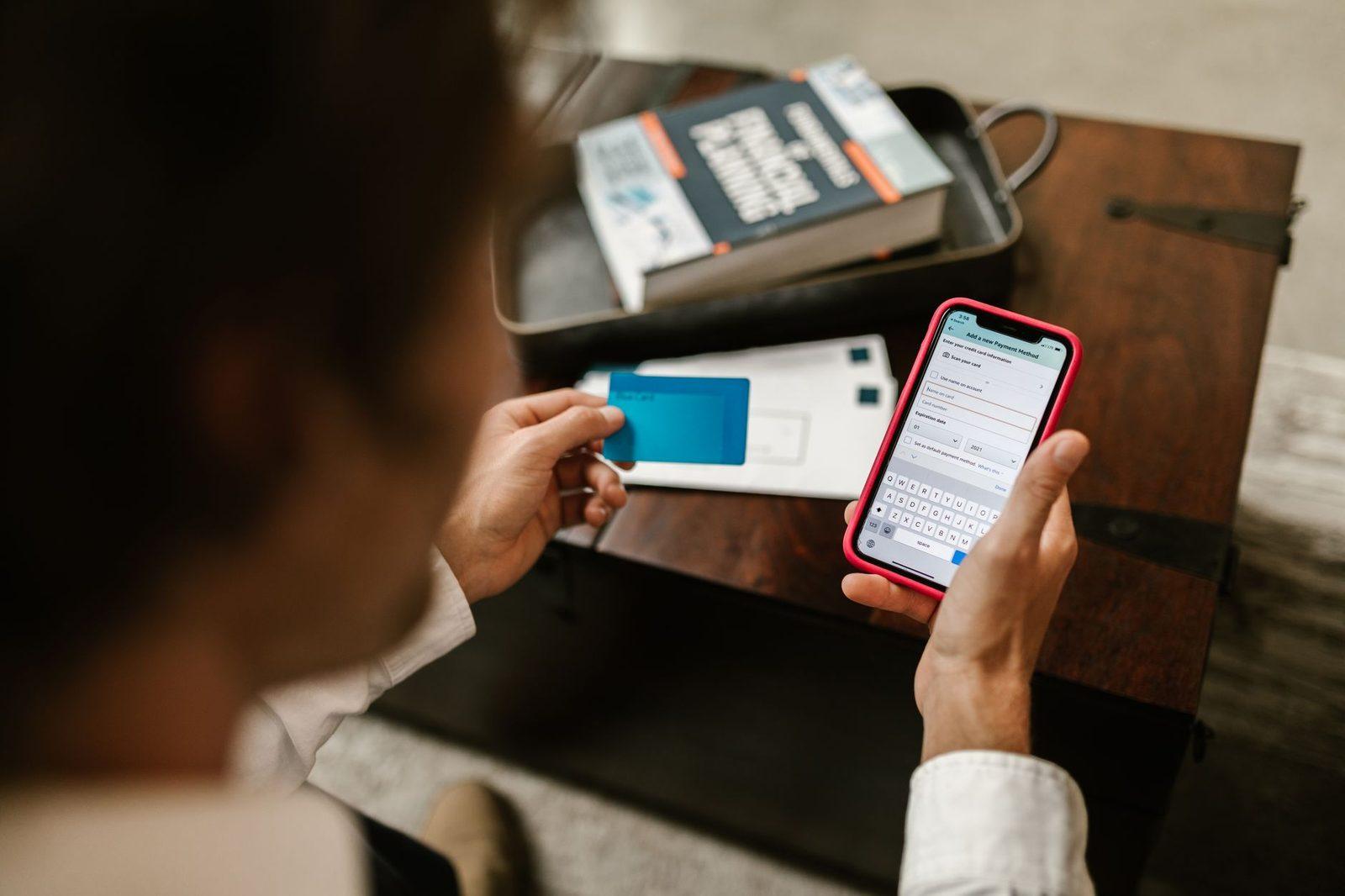
"Notary's office — probate file no. 2026-44871. An outstanding balance of fees remains due before closure. Settle within 72 h: etude-succession-reglement[.]net"
The message arrives eleven days after the funeral. Eleven days during which you have called the bank, the pension fund, the health insurer, the phone company, the home insurance provider, the tax office. Eleven days during which strangers have written to you, called you, sent you letterheaded documents you never read to the end. You do have a notary — someone in the family is handling it. That number, you don't recognise, but you no longer recognise any of the numbers that have been calling you for the past two weeks.
That is exactly where the scam lodges itself. Not in gullibility, not in carelessness: in a moment in life when the administrative background noise is so loud that one more fraudulent message doesn't stand out. Bereavement creates a window of vulnerability that fraudsters exploit methodically, and that is very rarely discussed.
Why a death is a windfall for a fraudster
A death in France triggers around thirty administrative steps on average, spread across some ten different organisations. The official service-public.fr website lists them: registration with the town hall, notification of social security bodies, cancellation of contracts, opening of probate with a notary as soon as there is property or a will, the deceased's tax return, transfer of bank accounts. Each organisation has its own deadlines, forms and reminders.
The result: for several weeks, the family is structurally incapable of telling a legitimate contact from a fraudulent one. The usual benchmark — "I'm not expecting anything from this organisation, so it's suspicious" — no longer works. You are expecting something from almost everyone.
On top of that come three factors that criminologists classically associate with a successful scam:
- The emotional load. The exhaustion of grief reduces sustained attention. You skim, you want to "get the paperwork over with".
- Blurred delegation. Among siblings, nobody knows exactly who called which organisation. "Maybe my sister set that in motion" is enough to defuse doubt.
- Money in motion. Probate involves transfers, fees, balances. A payment request doesn't seem absurd.
Cybermalveillance.gouv.fr, the public victim-assistance service, ranks phishing — including smishing, its text-message variant — as the leading reason private individuals ask for help, year after year. Campaigns targeting probate cases have no dedicated statistics, but notaries and victim support associations regularly report the phenomenon, particularly in the form of bogus calls for funds.
The four most common scenarios
1. The fake notary and the "closing fees"
The most lucrative one. The message refers to a probate file, a long reference number, a balance to settle before closure. Sometimes it mentions a real family name — which is nothing magical: death notices are public, published in the local press and on specialised websites, with the name, town and sometimes a list of relatives.
The technical tipping point: a notary never requests payment via a link in a text message. Probate funds pass through the office's accounts, into a dedicated account at the Caisse des Dépôts et Consignations, following a letter or an appointment. The Conseil supérieur du notariat regularly points out that no notary's office ever demands an urgent transfer by electronic message.
2. The fake funeral insurance
"Mr X's protection policy is due to mature. Complete the beneficiary file to release the capital." Here, the fraudster doesn't ask for money straight away: they ask for documents. Death certificate, family record book, bank details, ID. A perfect harvest for later taking out consumer credit in the name of someone living or dead.
3. The "pension overpayment"
This one targets surviving spouses. The message announces that a pension was wrongly paid after the date of death and demands immediate reimbursement. The situation is genuinely common — pension funds do indeed reclaim sums paid after a death — which makes the story highly credible. But the Assurance retraite and Agirc-Arrco proceed by official letter and by deduction from entitlements, never through a payment link sent by text.
4. The fake "online account closure" service
More modern: a message offers to delete the deceased's digital accounts, subscriptions and social media profiles. The link leads to a form requesting the deceased's login details… and often those of the relative filling it in. Yet all the major platforms have official, free procedures accessible from their own websites, with no intermediary.
What gives away a fraudulent message, even in the depths of grief
The classic visual reflex — hunting for a spelling mistake — is no longer enough. Recent campaigns are correctly written, sometimes translated by good-quality automated tools. Three clues, however, remain highly reliable.
| Signal | Legitimate message | Fraudulent message |
|---|---|---|
| The channel | Postal letter, appointment, call from an identifiable landline number | Text message alone, with a clickable link |
| The deadline | Weeks or months, written reminders | 24 h, 48 h, 72 h, "before suspension" |
| The payment | Transfer to an account communicated in official writing, verifiable bank details | Payment link, bank card, sometimes cryptocurrency or prepaid vouchers |
| The domain | Name of the office or organisation, .fr or .notaires.fr extension | Generic domain, multiple hyphens, .net, .info, .top extensions |
The most decisive point remains the payment method. No public body, no notary's office, no French insurer asks for payment by bank card through a link received in a message. It is a binary criterion, requiring no technical expertise, and it works even when you're reading fast.
Protecting a surviving spouse: the real front line
The most exposed person is almost never the one handling the estate. It is the surviving spouse, often elderly, often alone for the first time in decades, and sometimes uneasy with a smartphone the other one used to take care of.
A few concrete measures to put in place in the days following the death:
Appoint a single point of contact. One family member centralises all dealings with the organisations. They write down in a notebook — a simple A5 notebook does the job perfectly, and is easier to re-read than a thread of text messages — the date, the organisation, the name of the person spoken to and the number called. Any message that matches no line in the notebook becomes suspicious by construction.
Write the zero-payment rule down in black and white. Phrased simply, stuck on the fridge if need be: "no payment connected to the estate is ever made from a phone". That single sentence protects better than ten technical tips.
Make reading easier. Many fraudulent messages get through because the text is illegible. Increase the font size in the phone's settings, and for people who squint at small print, an LED illuminated magnifier placed near the phone makes it possible to calmly re-read a website address before clicking. Reading slowly is already a form of defence.
Simplify the device if necessary. If the surviving spouse inherits the deceased's phone or has to change handset, this is not the moment to switch to a complex model. A big-button mobile phone, with simplified messaging, mechanically reduces the exposure surface — fewer apps, fewer clickable links, less confusion.
Check the mobile contract. A mobile number no longer in use (the deceased's) must be properly cancelled with the operator, not simply abandoned. A line that is still active but neglected remains vulnerable to fraudulent SIM card reassignment.
The right channels for checking, worth keeping to hand
Faced with a dubious message, there is only one rule: never use the contact details contained in the message. You always call back through an independent channel.
- The notary: their number appears on official letters, or can be found through the official notarial directory at notaires.fr.
- The pension fund: your personal account on lassuranceretraite.fr or agirc-arrco.fr, never via a link received.
- The bank: the number printed on the back of the account holder's bank card, or the branch's number.
- Funeral or protection insurance: the paper contract, or AGIRA, the body that centralises searches for unclaimed life insurance policies.
- In case of general doubt: cybermalveillance.gouv.fr offers a free diagnosis and refers you to a professional if the device has been compromised.
And to report: 33700, a free platform run by the French mobile operators. You forward the suspicious text to 33700, you receive a request for the sender's number, and you send it back. It's anonymous, free, and it feeds into the blocking of fraudulent numbers.
Reporting won't get the money back, but it reduces the number of people who will receive the same message the following week. In a campaign targeting thousands of bereaved households, that counts.
If the damage is done: the first 48 hours
A victim of probate-related smishing often reacts too late, out of shame. That is the worst reflex: the chances of recovery depend on speed.
- Call the bank immediately to stop the card and request that the transfer or card transaction be blocked. Card payments that were not strongly authenticated can be disputed under Articles L133-18 et seq. of the French Monetary and Financial Code.
- File a complaint, at a police station, a gendarmerie, or via the online pre-complaint service. The receipt is a prerequisite for many subsequent steps.
- Change the passwords of the accounts concerned, starting with the email account, which acts as the recovery key for everything else. To avoid falling back into a single password reused everywhere, a secure password notebook — a simple paper address book kept out of sight — remains an acceptable solution for people who resist digital password managers.
- Watch out for identity theft if documents have been handed over: ask the Banque de France for a check of the FICP register, and keep an eye out for unknown loans appearing.
- Get support. France Victimes (116 006, free) offers legal and psychological support. After a death, absorbing a scam on your own is one ordeal too many.

The real issue: preparing beforehand, not reacting afterwards
The best protection against this type of scam is built while the people concerned are still alive. Not out of pessimism, but because a family that knows where the documents are won't be intimidated by a fake file number.
A physical file bringing together the insurance policies, the name of the family notary if there is one, the list of banks and organisations, and the essential access codes changes everything. An expanding document folder is enough; some prefer an estate planning guide that methodically lists the documents to gather and the steps to plan for. The aim is not to anticipate everything, but to have a point of truth against which to compare any message received.
Because that is precisely the central mechanism of this scam: it doesn't cheat on the technical side, it cheats on the absence of a reference point. A fraudulent message only becomes credible in an environment where nobody knows any more what is normal. Rebuilding a framework — a single point of contact, a notebook, a payment rule — is enough to make the whole scenario collapse.
A notary writes. A pension fund writes. An insurer writes. Grief is already hard enough without adding a permanent fear of your own phone: when in doubt, don't click, call back, and forward the message to 33700.